Cambridge University Press
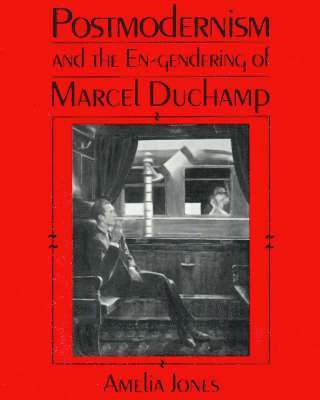
Postmodernism and the En-Gendering of Marcel Duchamp
649 sek
|
Nypris 1299 sek
Skick:
Titel: Postmodernism and the En-Gendering of Marcel Duchamp
Författare: Jones, Amelia ,Jones, Amelia (University Of California, Riverside)
ISBN: 9780521456548
Utgiven: 1995-08-25
Förlag: Cambridge University Press
Sidantal: 340
Format: Trade paperback
A critical analysis of postmodernism in the visual arts since the 1960s, this book focuses primarily on American texts that reference and construct Marcel Duchamp as the originator of postmodern art. Amelia Jones contends that Duchamp, through his 'readymades', (the standard terms used to describe Duchamp's works) has paradoxically served in a paternal role for post-1960s American artists, critics and art historians, who have attempted to construct a new tradition of artistic practice that counters the masculinist ideologies of Abstract Expressionism and Greenbergian modernism. Adapting feminist, psychoanalytic and Derridean conceptions of interpretation as an exchange of sexual identities, Jones offers highly charged readings that focus on the eroticism of Duchamp's works and on his theories of artistic production. She reconstructs Duchamp as an indeterminably gendered author whose gift to postmodernism might best be viewed in terms of the potential of his readymades to destructure the contradictory notions of sexual difference and subjectivity.